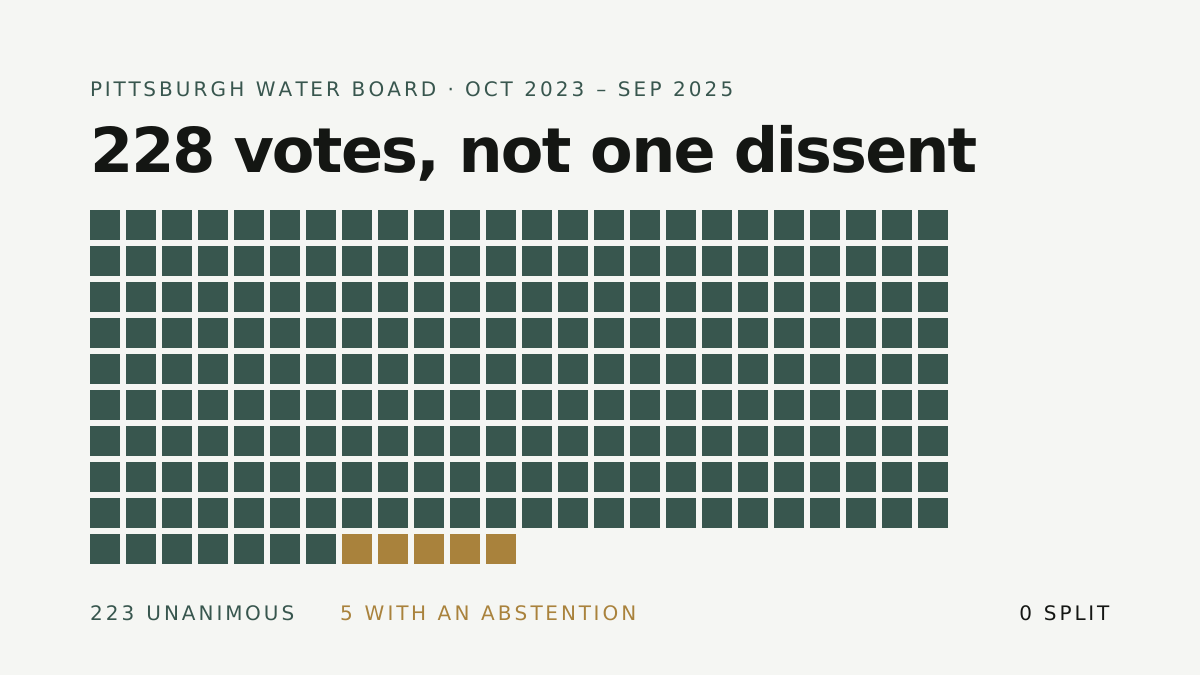
Across 24 board meetings from October 2023 through September 2025, the Pittsburgh Water board voted on 228 resolutions, was unanimous 223 times, and split zero times, authorizing more than $871 million along the way. Of those 228 resolutions, 156 drew no recorded question from any board member. Ten residents spoke to the board in two years. Every figure here is re-derived from the board's own minutes by a script anyone can run.
· With PublicSource
Load-bearing claims
7
5 Established, 1 Supported, 1 Thin
Sources independently timestamped
9 / 11
Verification gate
FailsRecorded run exits non-zero on 2 of 11 Wayback citations. Published saying so rather than waiting for a green light the archive has not earned.
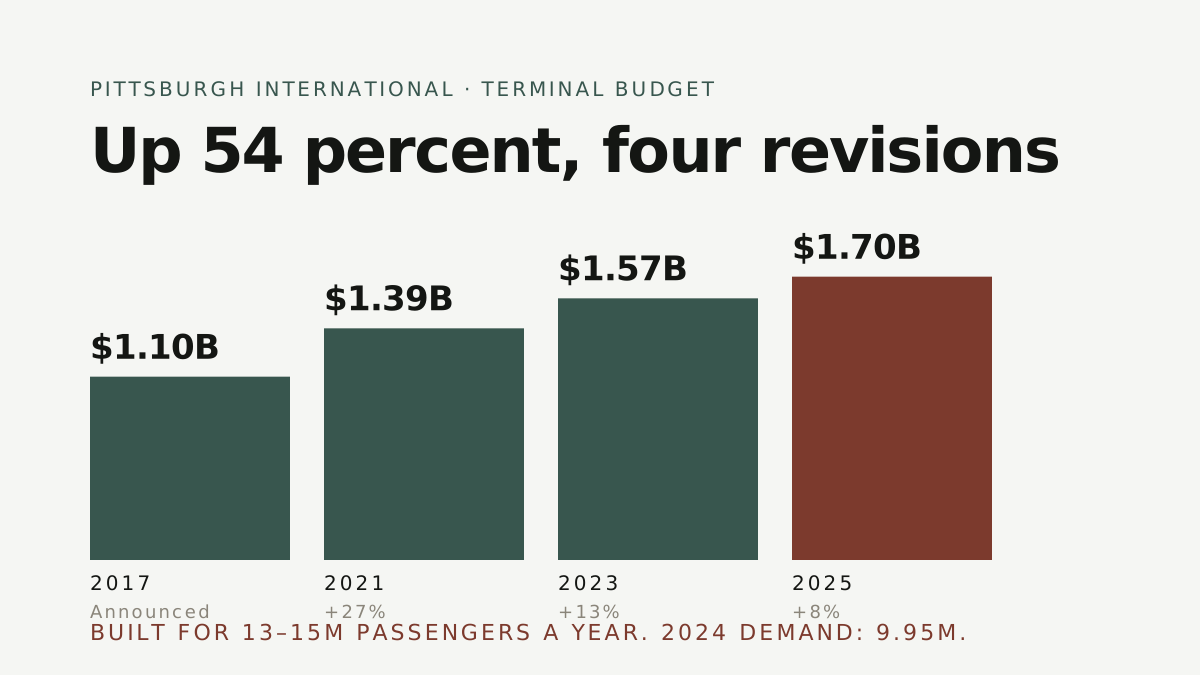
Pittsburgh International opened a $1.7 billion terminal whose budget rose 54 percent, about $600 million, across four revisions. It was built for 13 to 15 million passengers a year. In 2024 the airport served 9.95 million. The Authority named $129.7 million in federal and $80 million in state money at the ribbon-cutting and stopped counting; its own audited report puts $1.25 billion in bonds outstanding and $2.5 billion in debt service running to 2056.
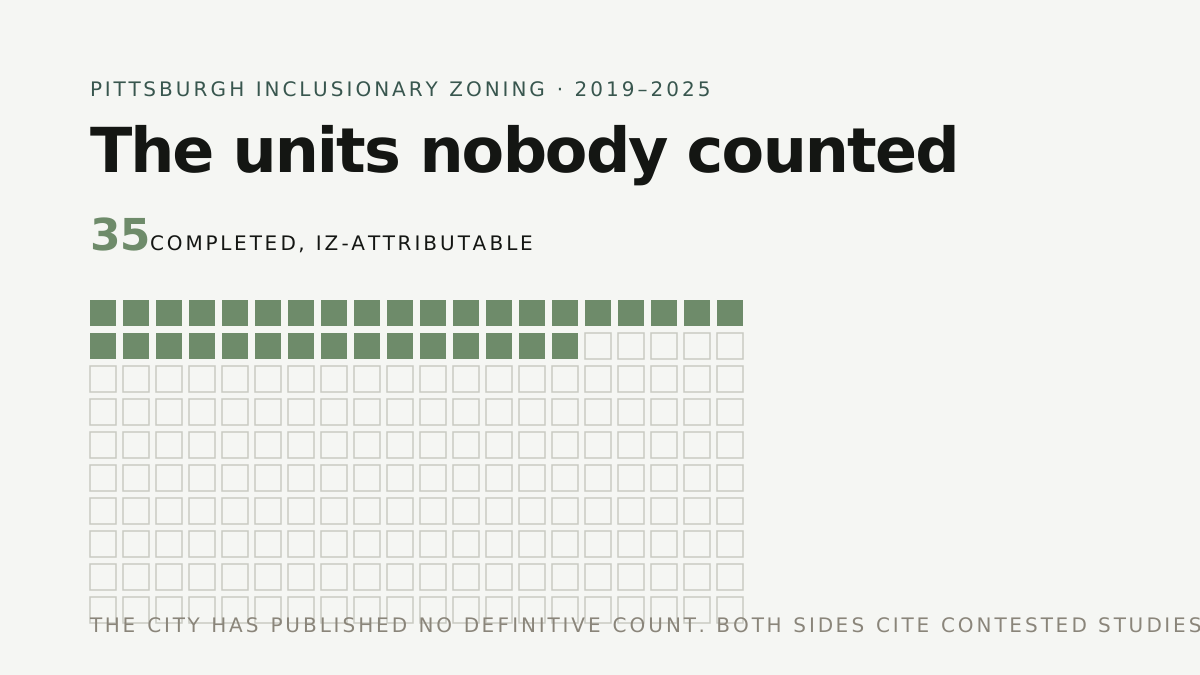
Six years after Pittsburgh's first inclusionary zoning district took effect, the city has published no definitive count of the affordable units the policy has produced, and both sides of the argument cite contested studies. This package compiles the project-level dataset nobody had: 35 completed IZ-attributable affordable units, 16 more under construction, and three projects documented as downsized to 19 units, one below the 20-unit trigger.
8 pieces are checked against their outlets' terms and queued. None is live yet: each carries conditions that have to be met per piece, and several of these licenses require a published contact address this site does not have.
A 672-acre data center drove more than $125 million in land purchases around Port Washington, at prices the county's own assessment records put far above fair market value. One 173-acre parcel sold for roughly seventeen times its valuation. The reporting is transaction-by-transaction against the assessment record, which is the same shape as checking a public board's minutes against what it authorized, and it is the reason this piece is here rather than a summary of it.
Wisconsin Watch built the database nobody had: what every local government in the state has actually done with its opioid settlement money, compiled from the spending reports state law requires them to file. Eight governments had spent more than half their money by the end of 2025. Sixteen had spent none. We are carrying it because Pennsylvania is running the same settlement through the same kind of county-by-county machinery, with far less visibility, and because the method here is the one that answers the question rather than describing it.
Seven months of program documents and contracts, asking why the same work costs what it costs in one city and not another. This is the nearest neighbour on the list to our own water record: a utility, a capital program, and a spending trail that only answers the question if somebody reads the contracts rather than the announcement.
· Grist house republication licence (not Creative Commons)
State-by-state participation data set against what lawmakers said would happen. No co-publisher, and nothing in the argument rests on a photograph, which makes it the cleanest republication on this list: the evidence is a number that moved and a record of what was promised before it moved.
A criminal investigation into a sitting senator's coal companies, closed. Rust-belt accountability and squarely in the public interest, and it rests in part on sources who are not named. That is a different evidentiary shape from the records-driven work around it here, and worth saying plainly rather than leaving a reader to work out.
Roughly a thousand pages of bankruptcy filings and claim-denial letters, read against what claimants were told to expect. The revised $7.4 billion Purdue settlement tightened eligibility to the point that more than half of about 140,000 claimants receive nothing. We are carrying it because it is the same settlement architecture Pennsylvania counties are spending against, and because the reporting is built from the paperwork rather than from the announcement.
· CC BY-NC-ND 3.0 US
Get the next investigation
One email when a piece runs, plus the weekly wire. Every claim in it will carry its grade and the thing that would prove it wrong, the same as everything else here.
Not yet wiredNo email provider is configured, so this form is not rendered rather than shown as a control that silently does nothing. Set NEWSLETTER.endpoint in src/site.tsonce a provider is chosen.
No tracking pixels, no list sales, and one click unsubscribes without a survey.
In 1976, after Watergate, about 72 percent of Americans told Gallup they trusted the news to report fully and fairly. By 2024 that number had fallen to roughly 32, and lower among the youngest adults, both figures from Gallup's standing trust-in-mass-media series.
Forty points in fifty years is not a dip in a cycle, and you cannot repair it by being a more careful version of the thing that broke. The profession's reflex is to ask for trust more firmly. That request is the disease.
So the design here borrows from cryptography. When a payment system was built for a world that no longer trusted financial middlemen, the design did not make the middlemen more trustworthy, it made them unnecessary.
A story you can check for yourself does not need your trust. Every claim that carries an argument here is graded in one plain word, shown with the source it rests on, and marked with the one thing that would prove it wrong.