Every claim graded, with the receipt behind it and the one thing that would prove it wrong.
The work
Investigations
Every piece carries its claims graded, the receipt behind each one, and the archive the receipts point at. Where a claim is weak, it says so on the page rather than in a footnote.
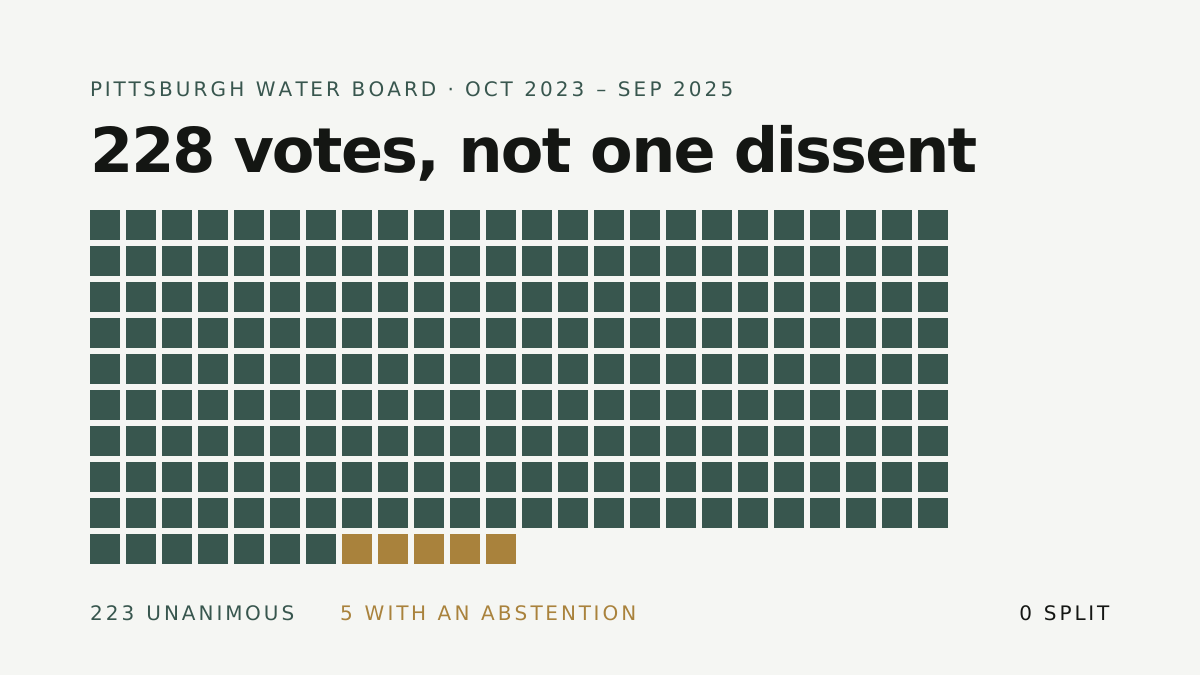
Across 24 board meetings from October 2023 through September 2025, the Pittsburgh Water board voted on 228 resolutions, was unanimous 223 times, and split zero times, authorizing more than $871 million along the way. Of those 228 resolutions, 156 drew no recorded question from any board member. Ten residents spoke to the board in two years. Every figure here is re-derived from the board's own minutes by a script anyone can run.
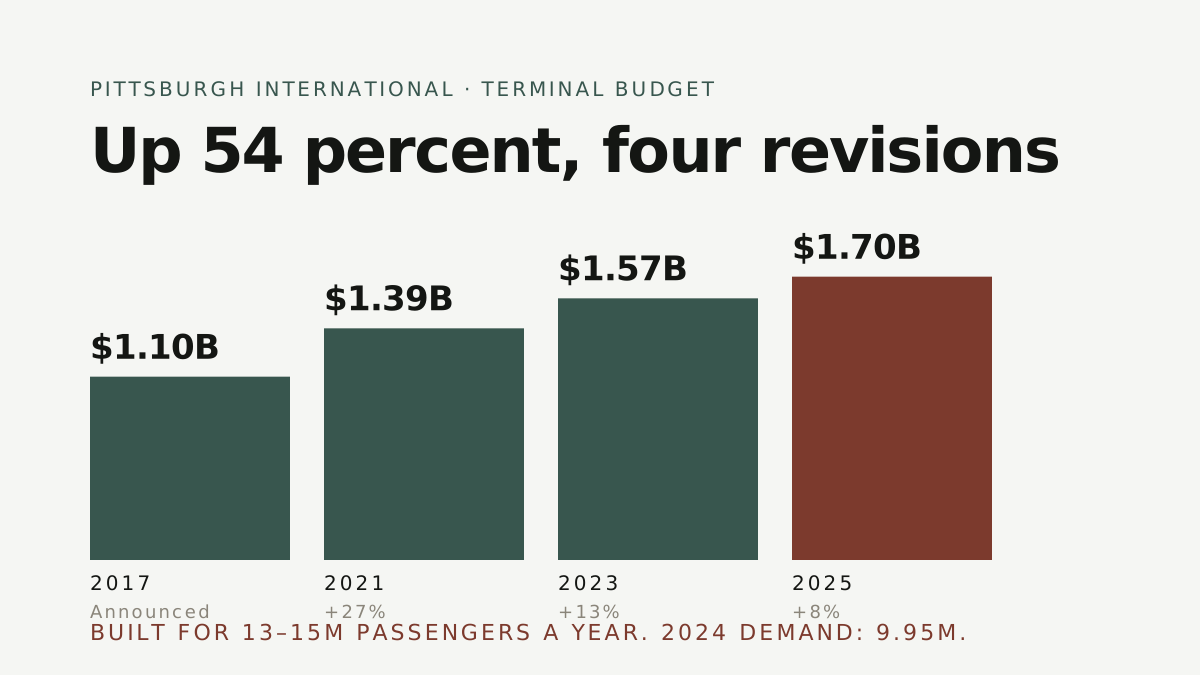
Pittsburgh International opened a $1.7 billion terminal whose budget rose 54 percent, about $600 million, across four revisions. It was built for 13 to 15 million passengers a year. In 2024 the airport served 9.95 million. The Authority named $129.7 million in federal and $80 million in state money at the ribbon-cutting and stopped counting; its own audited report puts $1.25 billion in bonds outstanding and $2.5 billion in debt service running to 2056.
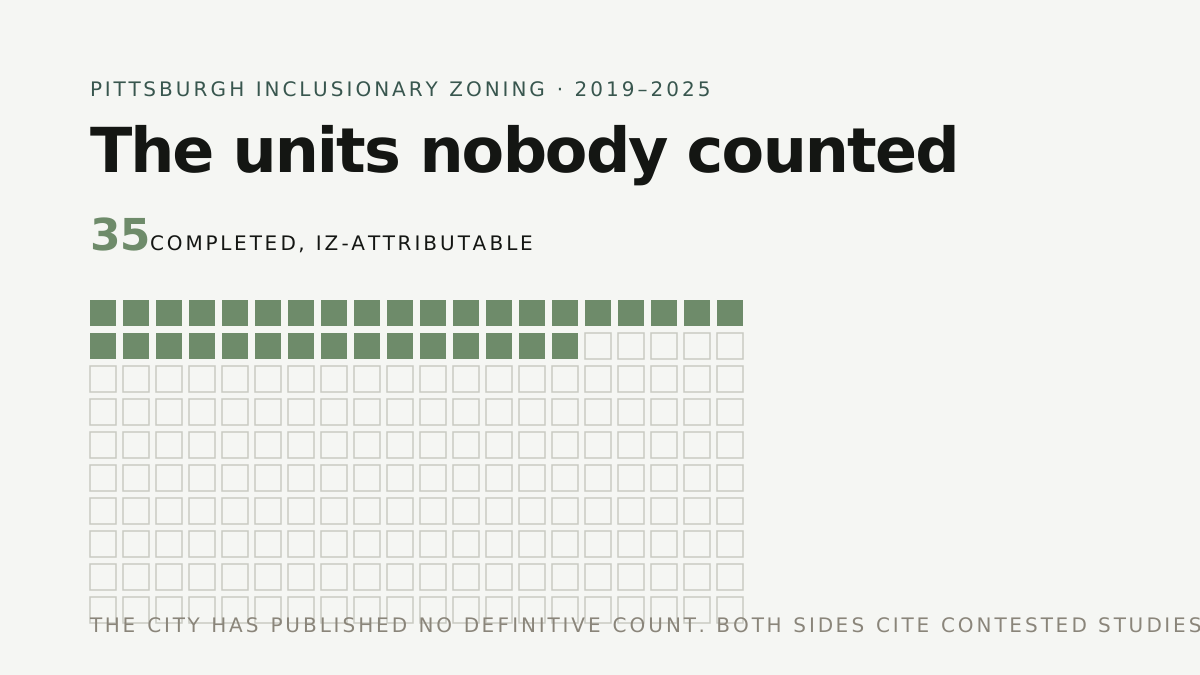
Six years after Pittsburgh's first inclusionary zoning district took effect, the city has published no definitive count of the affordable units the policy has produced, and both sides of the argument cite contested studies. This package compiles the project-level dataset nobody had: 35 completed IZ-attributable affordable units, 16 more under construction, and three projects documented as downsized to 19 units, one below the 20-unit trigger.